Best Shrimp and Vegetables in Coconut Milk Recipe (Filipino Ginataang Hipon)
Introduction
If you are searching for a rich, comforting, and deeply aromatic dinner, this easy shrimp and vegetables in coconut milk recipe is the perfect addition to your kitchen routine. Heavily inspired by Malaysian flavors and widely celebrated across the southern Philippines—where coconut-based cooking is a daily culinary staple—this traditional Southeast Asian dish perfectly pairs succulent seafood with fresh, tender vegetables.
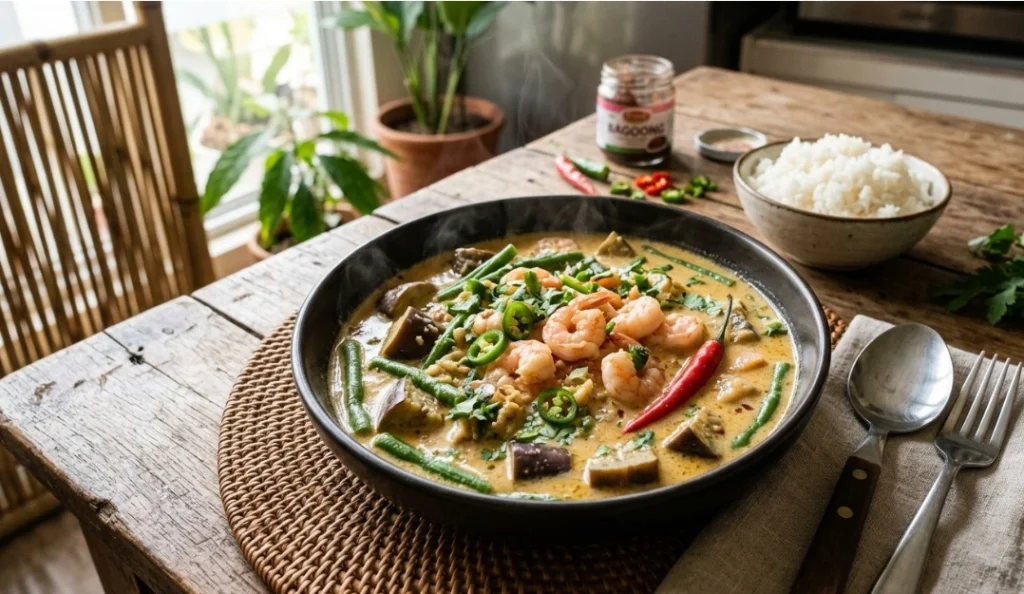
By combining sweet raw shrimp, rich and creamy thick coconut milk, hearty eggplants, and crisp green beans with the deep umami of traditional shrimp paste, you create a complex, restaurant-quality meal in under 45 minutes.
Whether you want a quick, nutrient-dense weeknight dinner or an impressive exotic dish to serve guests at a special weekend gathering, this step-by-step guide will show you how to master the art of velvet-smooth coconut sauces without splitting or overcooking your seafood.
Table of Contents
Why You’ll Absolute Love This Coconut Shrimp Casserole
- Deep and Complex Umami Flavor: The unique combination of fresh grated ginger, aromatic garlic, and authentic shrimp paste builds a rich savory base that balances the natural sweetness of coconut cream.
- Flawless Blend of Textures: Every single spoonful offers a beautiful contrast between the melt-in-your-mouth tender eggplant cubes, the snapping crunch of fresh green beans, and the delicate bite of perfectly pink shrimp.
- Quick, No-Fuss Preparation: Despite its complex flavor profile, this traditional recipe uses basic stovetop techniques and is ready from start to finish in just 45 minutes.
- Nutrient-Dense and Gluten-Free: Packed with vitamins from fresh garden vegetables, healthy fats from coconut milk, and clean lean protein from seafood, this recipe is naturally wholesome.
- The Ultimate Rice-Pairing Dish: The thick, velvety sauce is specifically designed to pour over a warm bed of steamed jasmine rice, creating a luxurious comfort food experience.
Recipe Details & Essential Kitchen Timing
- Prep Time: 20 minutes
- Cook Time: 25 minutes
- Total Time: 45 minutes
- Servings: 4 generous servings
- Cuisine Style: Southeast Asian / Southern Filipino (Ginataang)
The Ultimate Ingredient Selection Guide
To achieve the perfect balance of flavors in this shrimp and vegetable coconut curry, sourcing and prepping your ingredients correctly makes all the difference. Here is what you need to know before heating up your sauté pan:
1. The Seafood: Small Raw Shrimp (250 Grams)
For the best infusion of flavor, always purchase raw, peeled, and deveined shrimp. Small or medium shrimp work best for this specific style of dish because they distribute perfectly across every single serving, ensuring you get seafood in every bite. Avoid pre-cooked pink shrimp from the grocery store, as they will instantly turn rubbery, dry, and tasteless when reheated in the simmering coconut broth.
2. The Fresh Garden Vegetables (Eggplant & Green Beans)
- Eggplants (500 Grams): Traditional Asian long purple eggplants work best because they have thinner skins and fewer seeds, allowing them to absorb the coconut sauce like a sponge. However, standard globe or Italian eggplants work wonderfully too. Cut them into small, even cubes to ensure they cook through uniformly.
- Green Beans (250 Grams): Fresh, bright green beans add a necessary crunch and vibrant color to the plate. Ensure you trim off the woody stems and snap or cut them cleanly in half before rinsing them thoroughly in cold water.
3. The Creamy Base: Thick Coconut Milk (250 Milliliters)
Look for canned, unsweetened full-fat thick coconut milk or coconut cream at your local Asian market. Avoid “light” coconut milk or carton-based coconut milk beverages used for smoothies, as they contain too much water and will prevent your sauce from thickening into a rich, velvety glaze.
4. The Flavor Foundations (Aromatics & Umami)
- Fresh Ginger Root (1 Tablespoon, Grated): Fresh ginger adds a sharp, clean, and warming contrast to the heavy fat of the coconut cream. Never swap this for dry ground ginger powder.
- Shrimp Paste (2 Tablespoons): Sold in small glass jars at Asian grocery stores, this fermented ingredient (known locally as bagoong or belacan) adds a deep, intensely savory umami punch. It is the secret anchor that makes this dish taste truly authentic.
- Chili Pepper (1, Optional): Slicing a fresh red bird’s eye chili or jalapeño into the sauce adds a subtle, beautiful background heat that cuts through the creaminess.
Step-by-Step Cooking Instructions
Step 1: Prep and Dice Your Fresh Ingredients
Begin your kitchen prep by peeling your garlic clove and onion, chopping them both down into fine, uniform pieces. Wash your eggplants and cut them into clean, small cubes. Trim the ends off your 250g of green beans, slice them in half, and rinse thoroughly in a colander. Having all your ingredients chopped and ready by your stove is essential for smooth Southeast Asian stir-fry cooking.
Step 2: Sauté the Aromatics and Build the Base
Place a large, deep sauté pan, wok, or deep skillet over medium heat and add your 2 tablespoons of neutral cooking oil. Drop in the finely chopped garlic and sauté for about 1 minute until it turns a light golden color and smells incredible. Add the chopped onion and cook for another 3 minutes, stirring constantly until the pieces are soft and translucent. Stir in the 1 tablespoon of freshly grated ginger root, your eggplant cubes, and the trimmed green beans. Cook this mixture for 3 minutes, stirring regularly to coat the vegetables evenly in the hot garlic-ginger oil.
Step 3: Simmer and Infuse the Vegetables
Gently stir in your 2 tablespoons of savory shrimp paste, ensuring it distributes evenly across the vegetables. Pour in exactly 150 milliliters of your thick coconut milk (reserve the remaining 100ml for later). Mix everything together thoroughly, lower the stovetop heat to a gentle simmer, place a lid tightly over the sauté pan, and let it cook undisturbed for 15 to 20 minutes. This slow simmer allows the eggplants to soften completely, turning tender while drinking in the rich, complex flavors of the broth.
Step 4: Add Shrimp and the Final Coconut Layer
Remove the lid and pour in the remaining 100 milliliters of thick coconut milk to refresh the creaminess of the sauce. Toss in your 250g of clean, raw shrimp and add your sliced optional chili pepper if you enjoy a kick of heat.
Stir the shrimp gently into the hot liquid. Cook uncovered for approximately 1 to 2 minutes maximum. As soon as the shrimp turn from translucent grey to a bright, beautiful opaque pink, immediately turn off the heat. This prevents the delicate seafood from overcooking and shrinking. Serve immediately while steaming hot in a beautiful warm serving dish.
Professional Chef Tips for Flawless Results
- Never Overcook Your Shrimp: Seafood continues to cook in its own residual heat even after you turn off the stove. Remove the pan from the burner the exact second the shrimp curl into a soft “C” shape. If they tightly coil into an “O” shape, they are overcooked and will be rubbery.
- Prevent the Coconut Milk From Curdling: Cooking coconut milk on a harsh, rapid boil can cause the fats to separate from the liquids, creating a grainy texture. Always maintain a gentle, low simmer once the milk is added.
- Control the Heat Level: For a mild, child-friendly version, leave the chili whole in the pot during cooking to infuse a light aroma, or omit it entirely. For explosive heat, mince the chili finely with the seeds included.
Smart Substitutions and Dietary Variations
- The Fish Sauce Swap: If you cannot source authentic shrimp paste at your local market, you can substitute it with 1 to 2 tablespoons of high-quality Asian fish sauce. The flavor profile will be slightly lighter, but it will still provide that necessary savory umami depth.
- Vegetable Variations: This recipe is incredibly adaptable. If you do not have green beans or eggplants on hand, you can seamlessly swap them out for crisp snow peas, sliced zucchini, baby corn, or tender bok choy leaves.
- Go Completely Vegetarian/Vegan: To turn this into a plant-based feast, completely omit the shrimp and the shrimp paste. Replace them with cubes of pan-fried extra-firm tofu or earthy shiitake mushrooms, and use a premium vegan stir-fry sauce or light soy sauce to build up the savory base.
Complete Storage and Reheating Instructions
- How to Store Leftovers: Place any leftover coconut shrimp and vegetables inside a clean, airtight storage container and keep it in the refrigerator for up to 2 days.
- The Best Way to Reheat: Coconut milk dishes can separate easily if placed in a microwave. For the best restaurant-style results, transfer the leftovers into a small saucepan or skillet. Heat gently over low heat on your stovetop, stirring occasionally, just until the sauce is completely warmed through and the shrimp are hot.
Detailed Nutritional Breakdown (Per Serving)
- Calories: 245 kcal
- Total Fat: 18 g
- Saturated Fat: 12 g
- Cholesterol: 115 mg
- Sodium: 640 mg
- Total Carbohydrates: 12 g
- Dietary Fiber: 4.5 g
- Sugars: 4 g
- Protein: 14 g
Frequently Asked Questions (FAQ)
Can I use frozen shrimp instead of fresh raw shrimp?
Absolutely! Frozen shrimp are highly convenient for this recipe. Just make sure to thaw them completely in a bowl of cold water beforehand. Once thawed, pat them completely dry with a paper towel before tossing them into the sauté pan. If you throw wet shrimp into the curry, the excess ice-water will thin out your thick, creamy coconut sauce.
What should I serve alongside this Southeast Asian dish?
The absolute best accompaniment for this recipe is a large bowl of freshly steamed white jasmine rice or basmati rice. The fluffy, neutral grains act as a perfect canvas to soak up every single drop of the rich, savory coconut milk broth. For a low-carb alternative, it pairs beautifully with cauliflower rice or a light side of steamed broccoli.
Conclusion: A Rich Southeast Asian Escape at Home
Mastering the beautiful, complex flavors of traditional Southeast Asian cuisine does not require complex tools or hours of stressful kitchen prep. This easy shrimp and vegetables in coconut milk recipe proves that by combining a few fresh, vibrant vegetables with full-fat coconut milk and authentic savory aromatics, you can create a luxurious, well-balanced meal that satisfies every craving. It is a fantastic lifesaver for busy home cooks who want to elevate their protein and vegetable game, offering a deep comfort food experience that leaves everyone at your dinner table asking for seconds. Prep your ingredients, fire up your sauté pan tonight, and bring an authentic taste of the tropical Philippines straight to your dining room. Happy cooking!